Foot and ankle
- Plantar heel pain (plantar fasciitis)
- Achilles tendinopathy
- Shin splints (medial tibial stress syndrome)
Short treatment courses for stubborn tendon problems, with musculoskeletal ultrasound to confirm the target before the first pulse.
Photos: STORZ MEDICAL
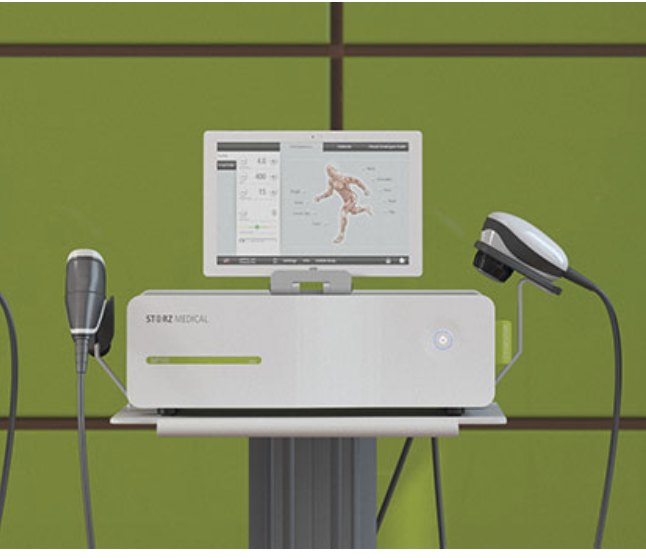
Radial shockwave therapy uses a handpiece that fires rapid acoustic pulses through the skin into a tendon, muscle, or area of connective tissue. Each treatment takes a few minutes. It is uncomfortable while the handpiece is on the sore spot, and the intensity is adjusted to what you can tolerate. No anesthetic, no needles, no downtime, and you walk out and go about your day.
Radial units are the type most of the published trials on heel pain, tennis elbow, and tendinopathy used. They treat from the skin surface down to a few centimeters, which covers most tendon and muscle targets. Deeper or calcified targets, and anything that is not improving after three sessions, get a different plan.
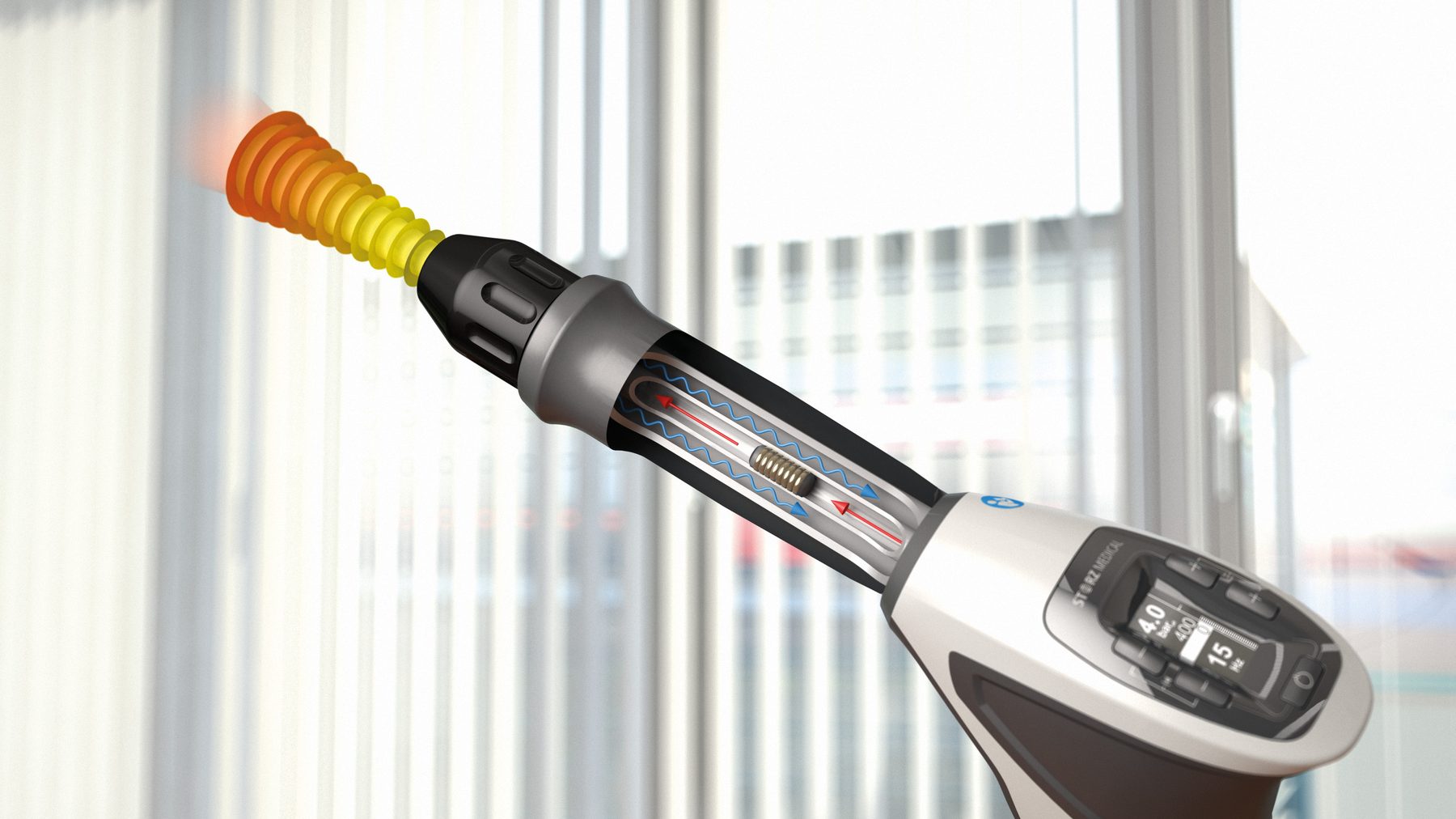
Inside the handpiece: compressed air drives a projectile into the applicator, and each strike sends a pulse into the tissue. Photo: STORZ MEDICAL
The current-generation radial shockwave system from the Swiss manufacturer whose units appear throughout the published shockwave research. A clinic-grade unit, with applicators sized to the target and output set for each treatment rather than one fixed level.
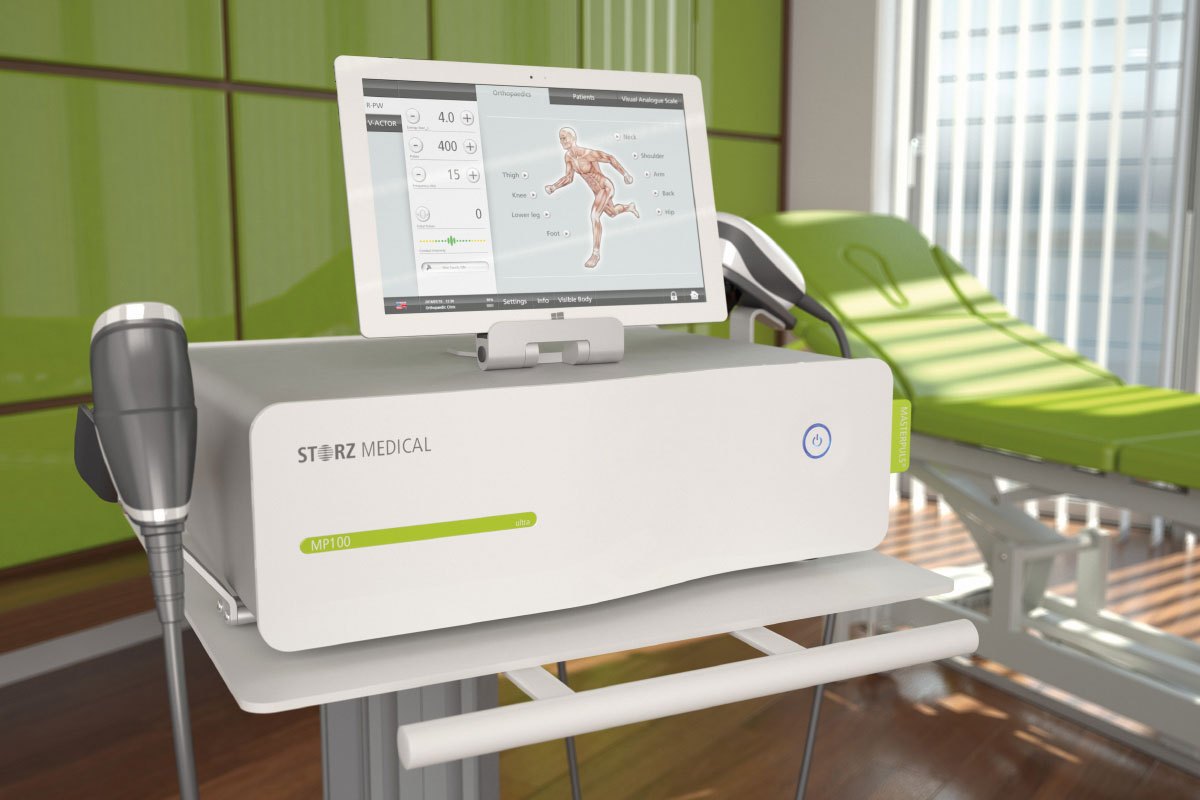
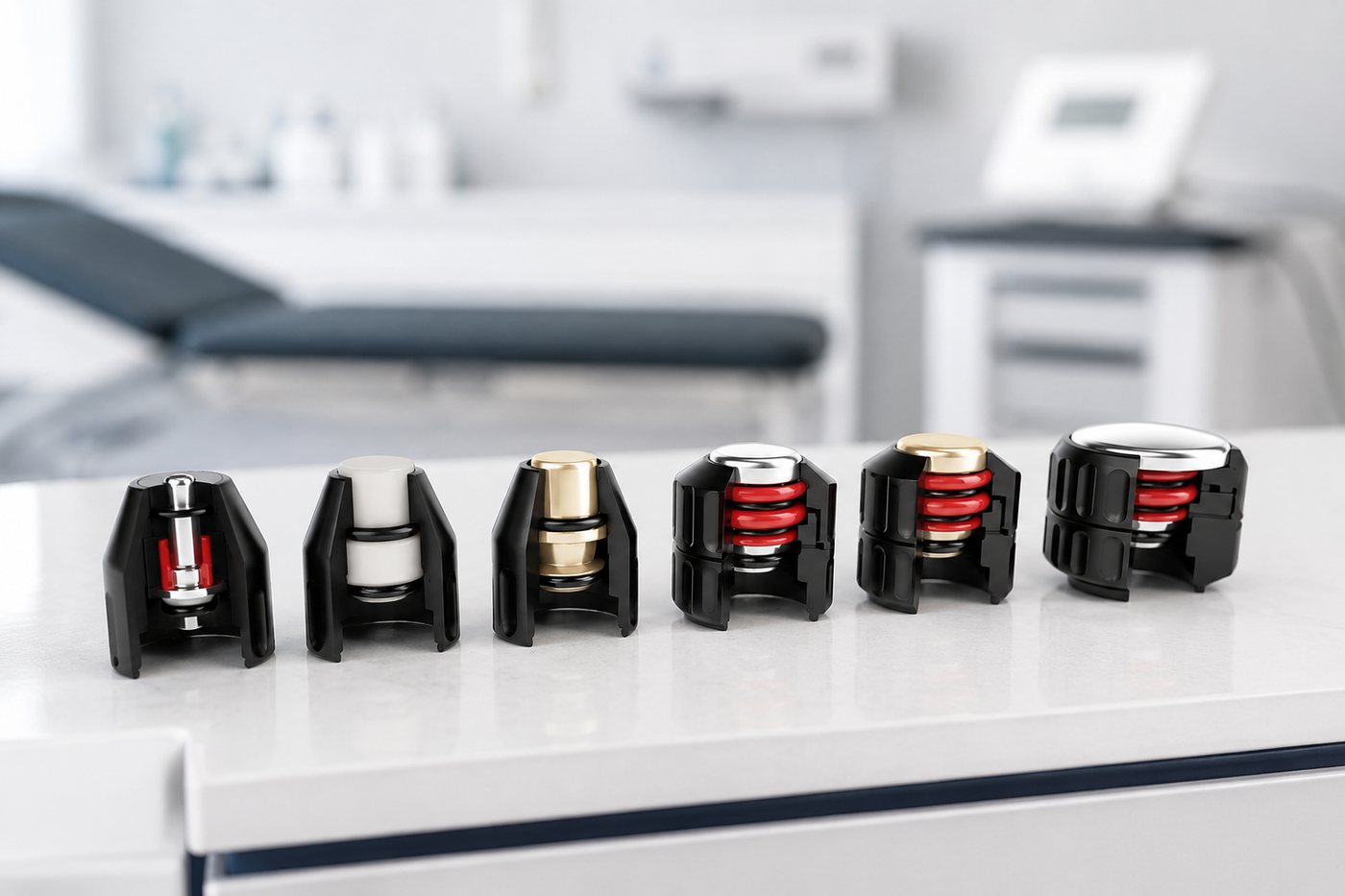
Photo: STORZ MEDICAL
Shockwave is a tendon and soft-tissue tool. It is not a treatment for everything, and the evaluation is where we decide together whether it fits your problem.
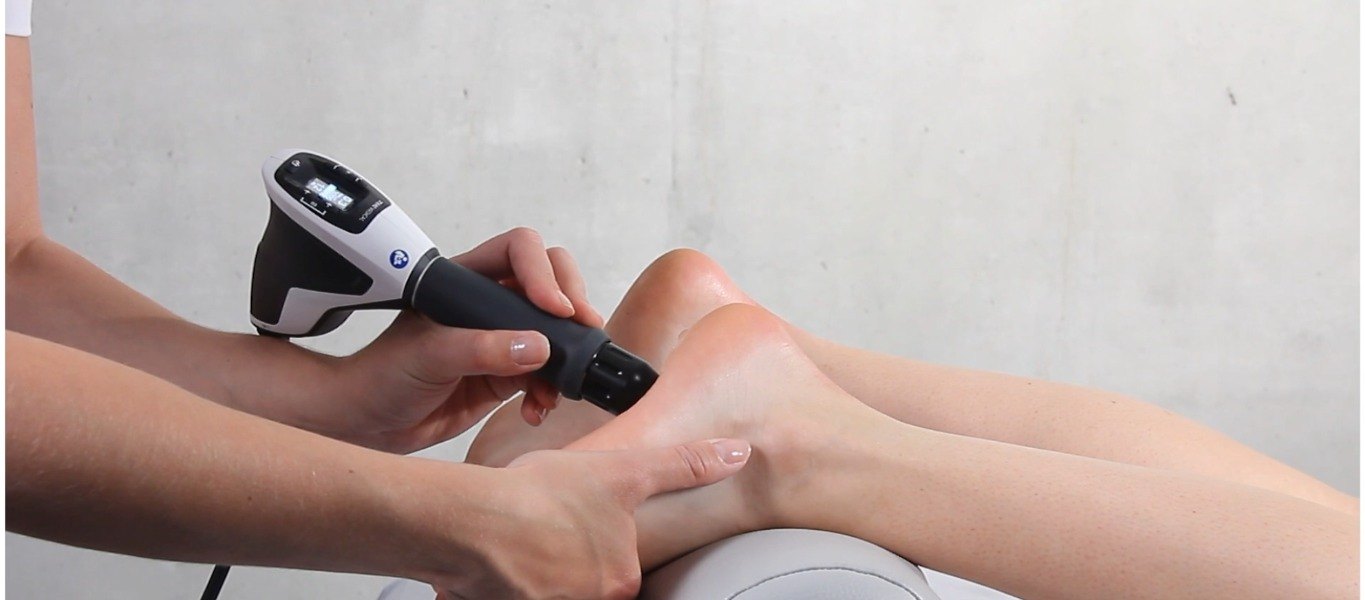
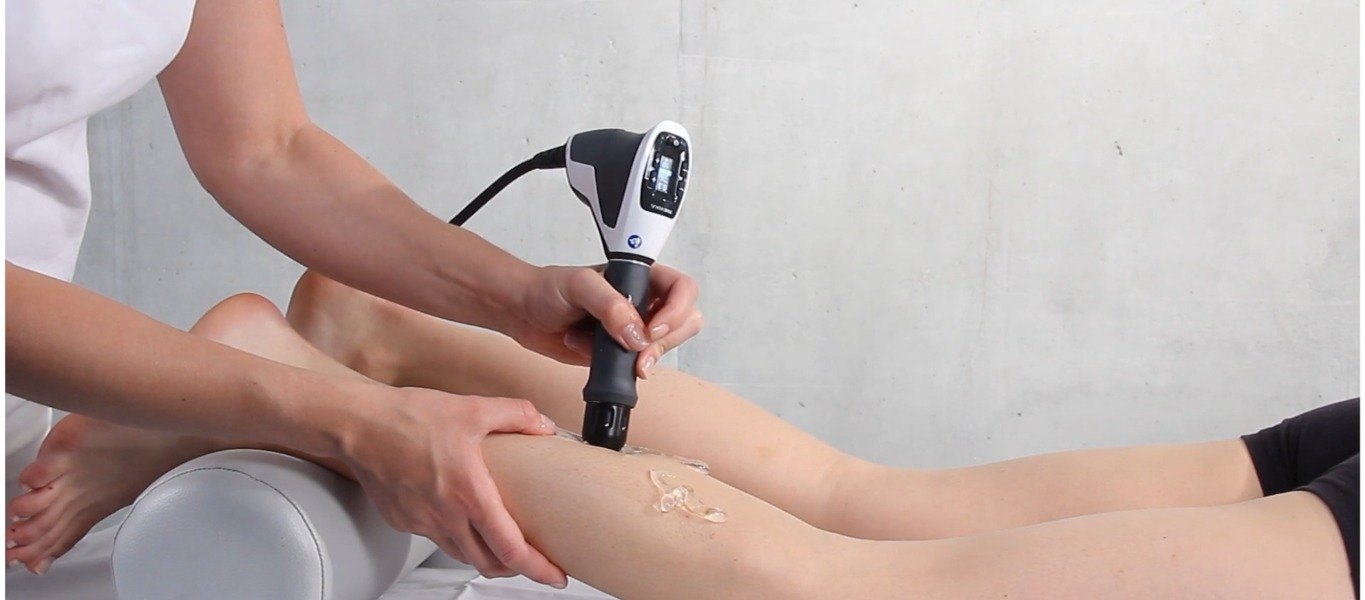
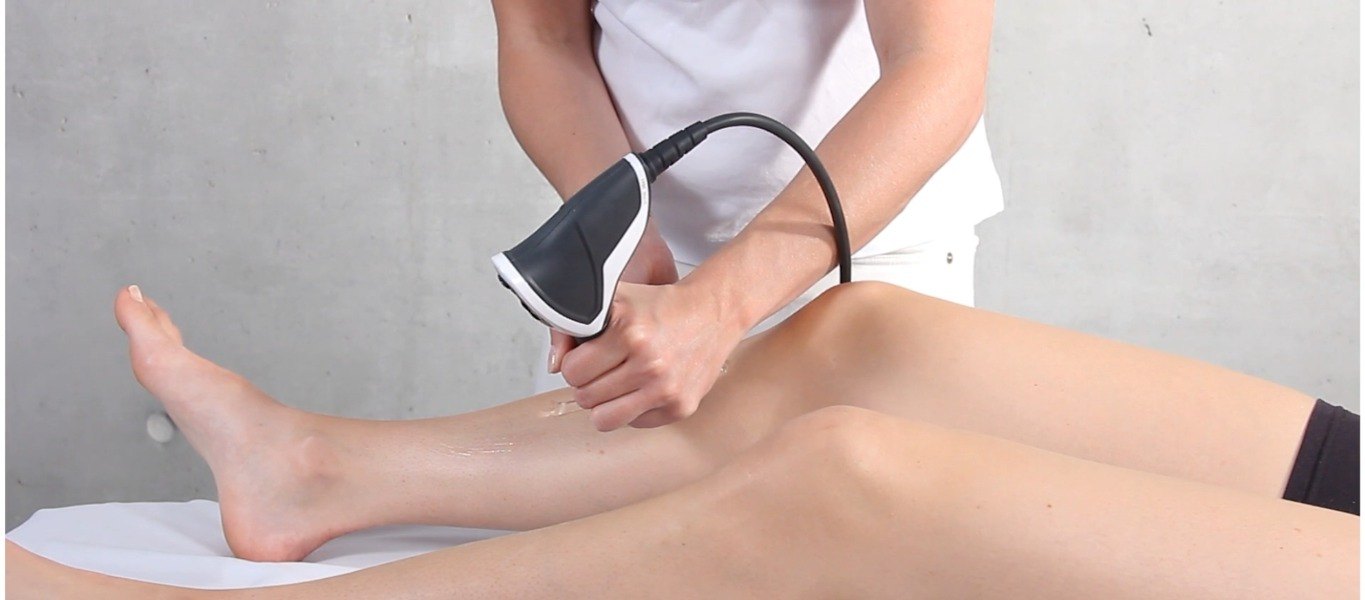
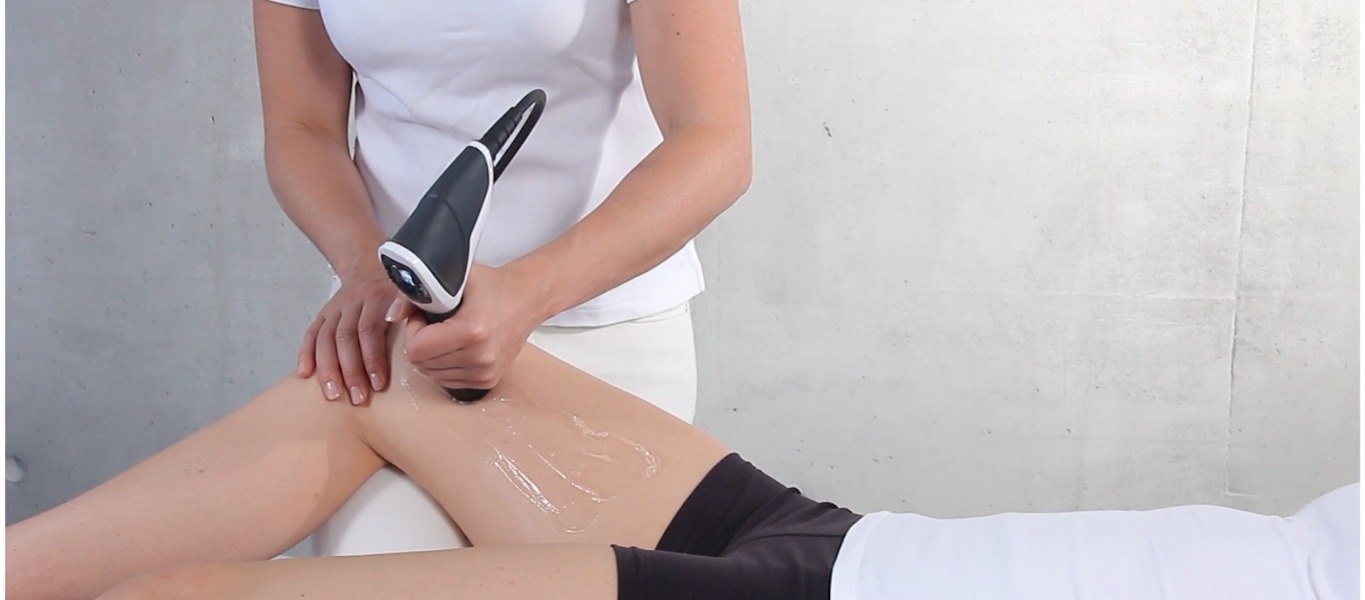
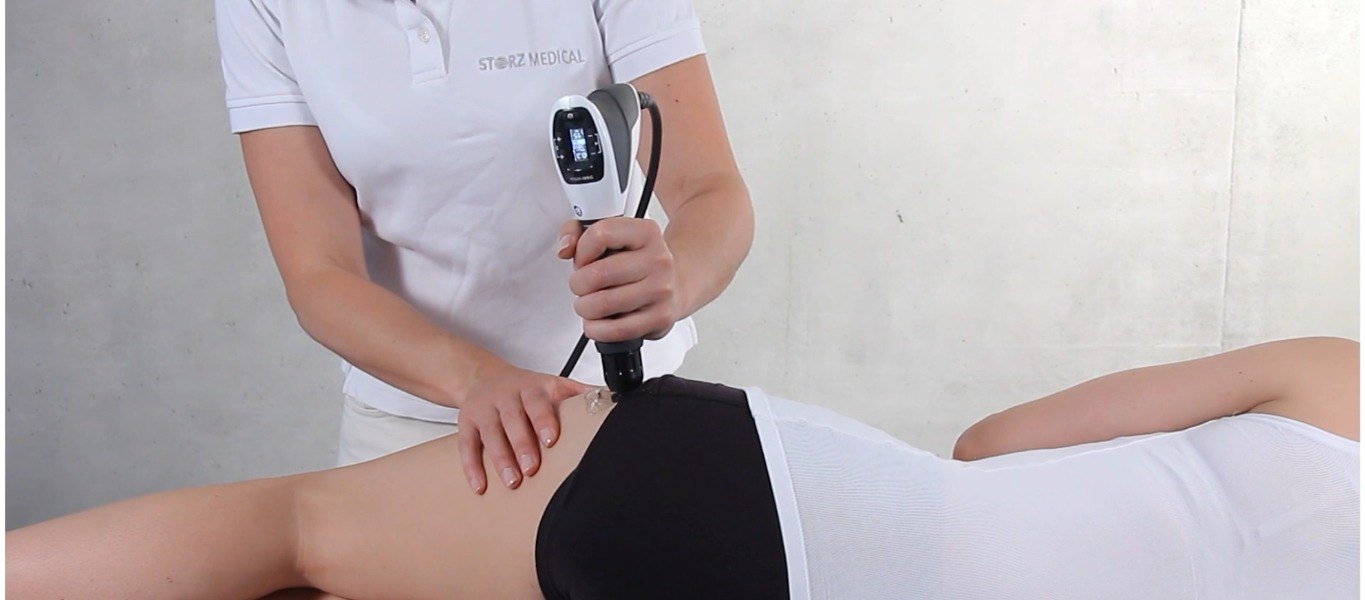
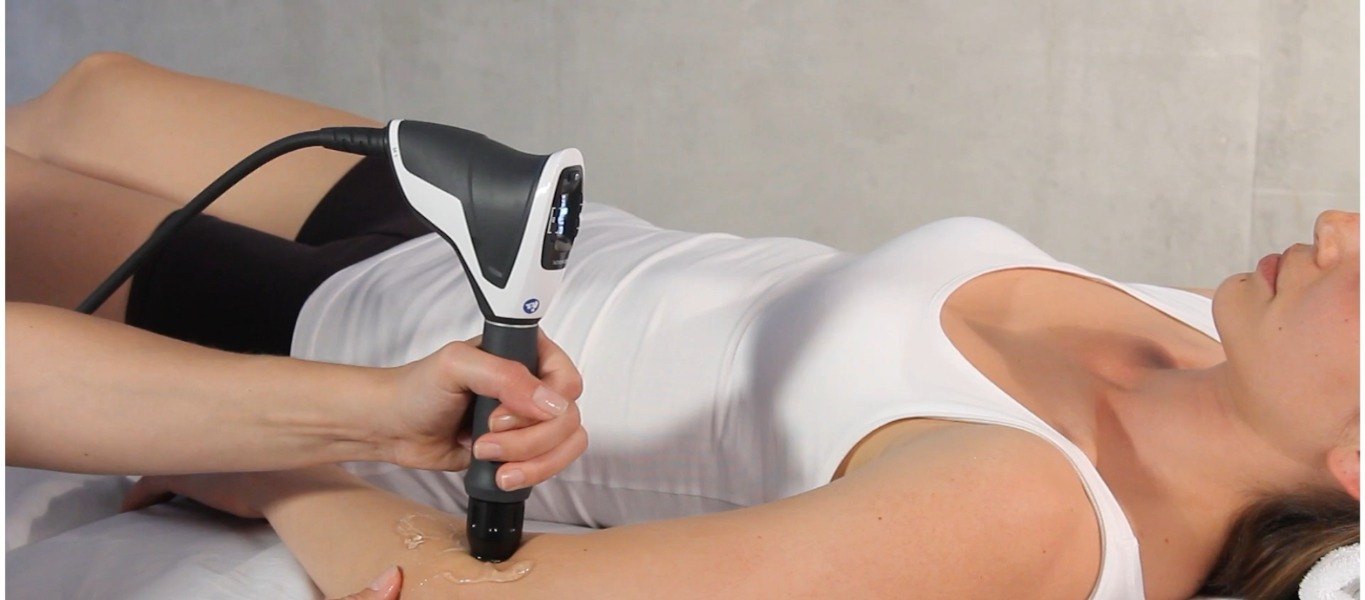
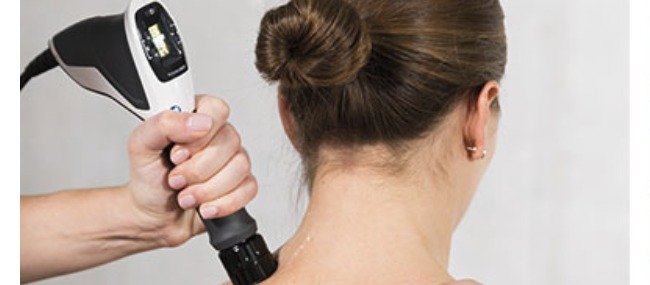
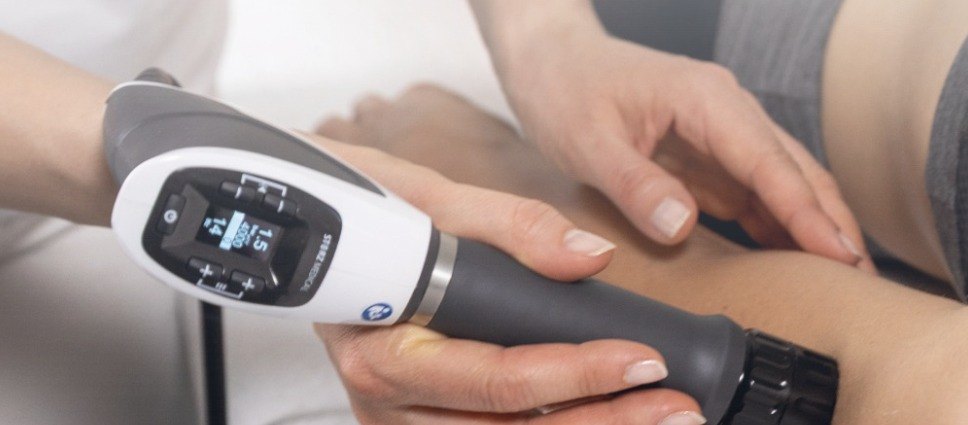
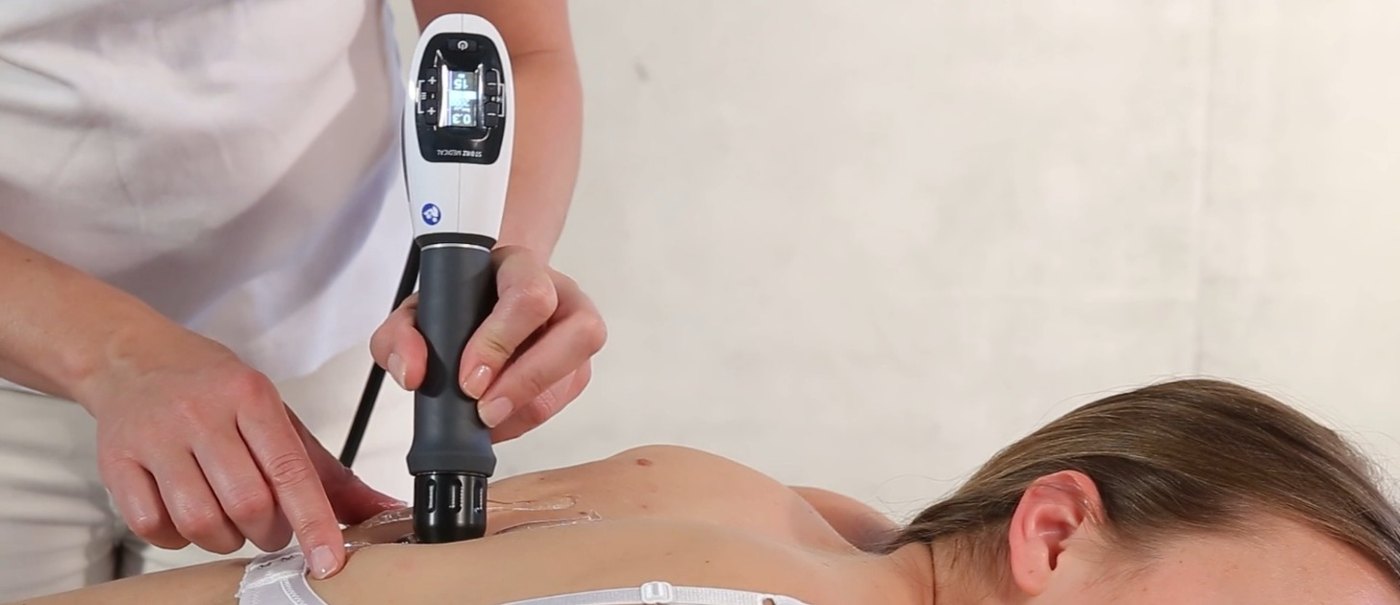
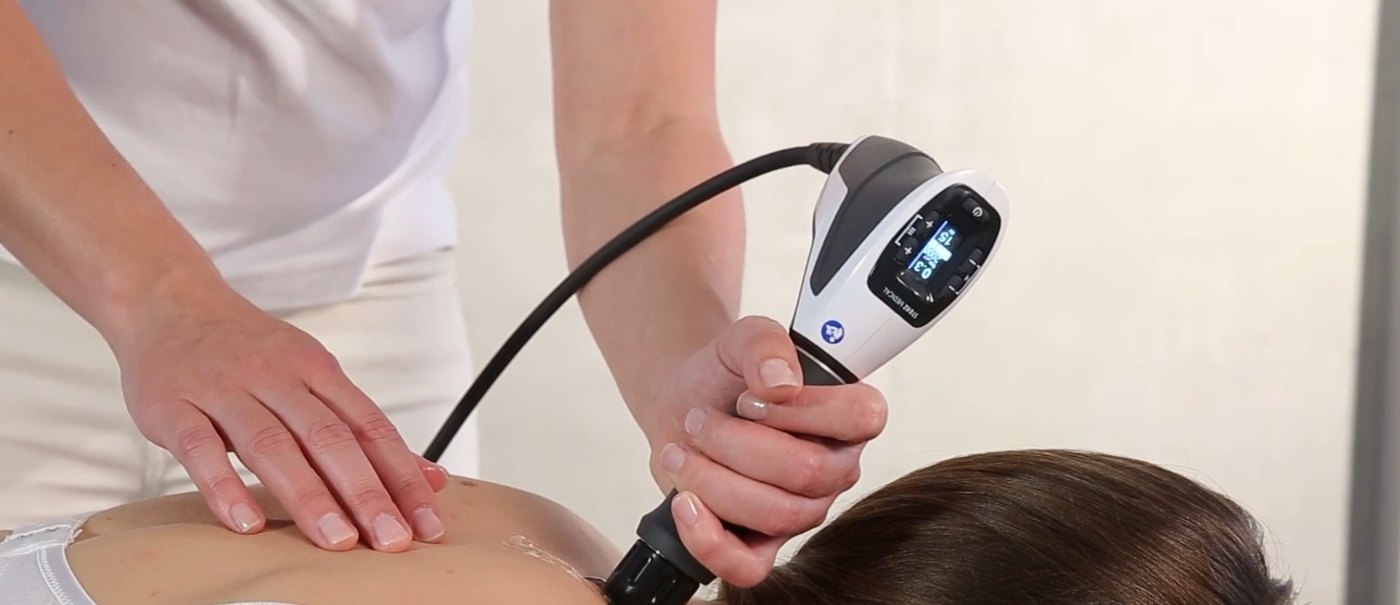
Photos: STORZ MEDICAL
Results vary by person and by condition. The evidence is strongest for plantar heel pain and tennis elbow. I will tell you at the evaluation where your problem sits, and if shockwave is not the right tool for it you pay for the evaluation only.
60 minutes, one-on-one. History, hands-on exam, and musculoskeletal ultrasound to confirm the target and its depth. Baseline measures. If shockwave fits, your first treatment happens the same visit.
Four 20-minute follow-up visits, about a week apart. Each one is a recheck, the treatment, and an update to your loading program. Purchased at the evaluation, valid 26 weeks.
Progress is measured against your baseline at the end of the course and again at 6 and 12 weeks. If you are not improving after three sessions we change the plan rather than keep going.
60 minutes, one-on-one. First treatment included.
Four 20-minute treatment visits after your evaluation.
Unused course visits are refunded. Care is never extended just to use up a course.
Shockwave is offered at Kinetic Spine & Sport only, not at Mark 44 MMA. Payment at time of service. HSA/FSA accepted. No insurance billing.
Shockwave courses run out of Kinetic Spine & Sport at 1219 Caledonia St. in Mankato, where the unit lives. I am there Tuesdays, 8 a.m. to 1 p.m., by appointment.
If Kinetic or another clinic sent you here, you stay with them for the rest of your care. I handle the shockwave evaluation and the treatment course, send a summary back to your provider with your permission, and you go back to them when the course is done. No referral is needed to book.
Kinetic Spine & Sport
1219 Caledonia St., Mankato, MN 56001
Enigma is here Tuesdays, 8 a.m. to 1 p.m.
kinetic-chiro.com
Pregnancy. An implanted stimulator near the treatment area. Active infection or open skin at the site. A tumor at the site.
Blood thinners or a bleeding disorder. A steroid injection at the site in the last 6 weeks. Under 18. Cancer elsewhere.
Common after-effects are soreness, redness, or mild bruising at the site for a day or two. Treatment is paused if the area is unusually painful or swollen.
I read the research before buying this unit. The headline trials first, then the fuller picture by problem, with every paper listed below so you can check them yourself.
61% of patients a treatment success at 12 weeks versus 42% with sham, in a 245-patient placebo-controlled trial of radial shockwave for chronic plantar fasciitis [11].
Radial shockwave beat a cortisone injection at 4 months (68% versus 51% success) and at 15 months (74% versus 48%) in a 229-patient randomized trial [12].
Calcifications disappeared completely in 87% of treated patients and in none of the control group, with less pain and better function at 6 months [13].
Adding radial shockwave to a loading program took the rate of patients completely recovered or much improved at 4 months from 56% to 82% [14].
Across 12 randomized trials, shockwave beat sham on pain and grip strength and radial outperformed focused, though the average effect was modest and strongest in people with symptoms over 6 months [15].
These are the trials the course is modeled on: 3 to 5 radial treatments, no anesthetic, paired with loading exercise. The blocks below give the fuller, more mixed picture by condition.
Radial versus focused shockwave. A 2026 meta-analysis of 21 randomized trials found no significant difference between focused and radial devices for pain, function, or range of motion at any follow-up, with low certainty in the data [1]. A 2026 meta-analysis limited to tendinopathy also found no clear winner, and radial improved wrist extensor strength in tennis elbow [2]. Radial is the type most of the heel pain and tennis elbow trials used.
Plantar heel pain. This is where the radial evidence is deepest. Results against focused devices are mixed: one pooled analysis of placebo-controlled trials favored focused [3], a network meta-analysis ranked radial highest and called it an appropriate, lower-cost option [4], and a head-to-head randomized trial in calcaneal spur found radial better on the Foot Function Index [5].
Patellar tendinopathy. A randomized trial comparing the two device types found no difference in effectiveness [6].
Shoulder. For non-calcific rotator cuff tendinopathy, focused did better than radial at 24 and 48 weeks in one randomized trial [7]. Higher-energy focused treatment is also the better-supported choice for calcific deposits [10]. If your shoulder looks like one of those on ultrasound, I will say so at the evaluation rather than sell you a course.
Knee osteoarthritis. Focused outperformed radial in a randomized trial [8]. Arthritic knee pain is not a problem I promote radial shockwave for.
Myofascial trigger points. Both radial and focused beat sham treatment, with no difference between the two [9].
How it should be delivered. The current best-practice guidance is 3 to 5 treatments about a week apart, treating the most painful spot without anesthetic, and using imaging for structures that are hard to find by feel, such as calcific deposits [10]. That is how the course here is built.
It is uncomfortable on the sore spot while the handpiece is running, usually a few minutes, and most people describe it as tolerable. The intensity starts low and is adjusted to you. Soreness for a day or two afterward is normal.
Most published protocols use 3 to 5 treatments about a week apart. The course here is the evaluation with the first treatment, then up to four follow-ups. If you are not improving after three sessions we change the plan rather than keep going.
To confirm that the structure we are treating is the structure that is sore, to measure how deep it is so the right applicator is used, and to find things like calcific deposits that are hard to locate by feel. Findings are documented descriptively within physical therapy practice and are not a medical diagnosis.
No. Radial units deliver energy that is strongest at the skin and spreads outward; focused units concentrate energy at a set depth. Head-to-head trials across tendon conditions have mostly found no meaningful difference between the two, with focused having an edge for some deep or calcified targets. The evidence section above has the papers.
No. Minnesota is a direct-access state. Many patients come referred by their chiropractor or physical therapist, and they keep that provider for the rest of their care.
The evaluation is $185 and includes the first treatment. The follow-up course of four 20-minute visits is $210, purchased at the evaluation. Unused course visits are refunded. HSA/FSA accepted, payment at time of service, no insurance billing.
Tuesdays at Kinetic Spine & Sport, 1219 Caledonia St., Mankato. Shockwave treatment begins December 2026 (estimated).